Hideo tries to contact his son, Shigeki
Strangers (Taichi Yamada Edition)Hideo Harada’s attempt to reconnect with his son Shigeki begins as an answer to a belated recognition: the father who has been accepting love from his dead parents wonders whether he can offer that same love to the son from whom he had chosen to turn away. The effort is tentative and carefully arranged, but it exposes how much distance has accumulated between father and son. Before Hideo can reach Shigeki, he must confront his ex-wife’s view of his past neglect—and the possibility that concern arriving late may not be welcome.
Background and estrangement
On the taxi ride home after visiting his parents, Hideo reflects on their restraint. They had expressed no wish to visit him, and he had not invited them; the unspoken boundary between their apparent return and ordinary reality remained intact. In that subdued aftermath, he remembers Shigeki. The recollection is not of a recent quarrel but of a longer withdrawal that began around the time Hideo and his wife started discussing divorce.
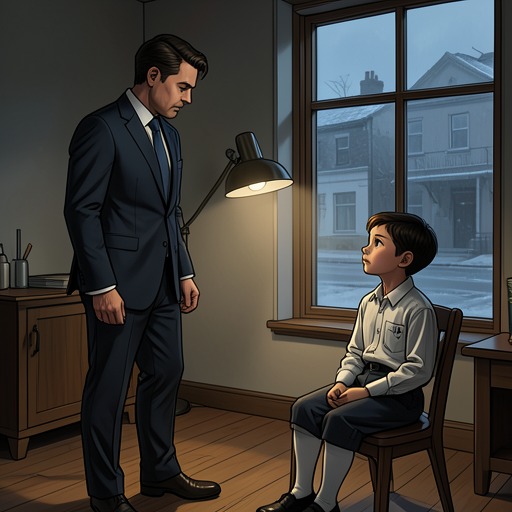
Shigeki had sided with his mother. He ignored Hideo when his father spoke, while continuing to speak with his mother with their former ease. Hideo understood that the boy would live with her after the divorce and accepted that his son might become closer to her through his antipathy toward his father. He even reasoned that if Shigeki’s dislike helped him be a better son to his mother, Hideo should stop trying to win his affection. He decided, in effect, to forget him. The decision presents itself as accommodation, but it also records Hideo’s retreat from the work of maintaining the relationship.
The decision to reach out
Now Hideo considers that Shigeki may have learned of his mother’s relationship with Mamiya. He cannot know how the young man feels about it, but he wonders whether, despite being a nineteen-year-old college sophomore, Shigeki might need a father’s love. Hideo’s own return to the affection of his parents supplies the immediate comparison: if he has been able to receive their love, he might repay it by giving his son the same kind of care.
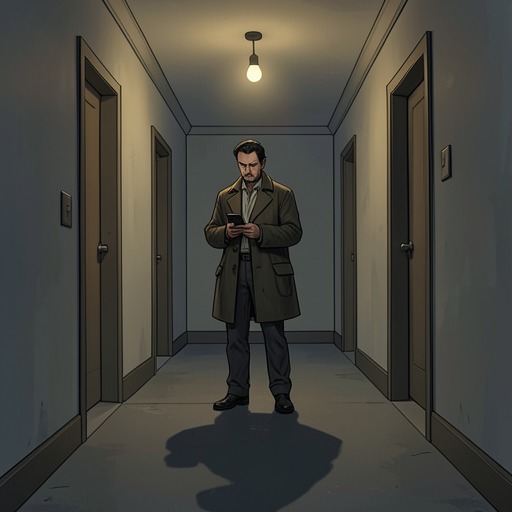
The thought becomes a practical plan. Hideo asks the taxi driver to take him to Akasaka and gives him the name of a hotel. Staying there, rather than going home, will let him avoid lying to Kei for at least that night. From the hotel he intends to call Shigeki and ask him to come the next day, perhaps for lunch; he will also give him extra spending money. The gesture is concrete, but Hideo is unsure how an unexpected invitation from a father who had effectively abandoned the relationship will be received.
A call answered at a distance
The call reaches the family residence under the name Imamura, his ex-wife’s maiden name. When she hears Hideo identify himself, she hesitates and initially asks whether the caller is Shigeki. The brief uncertainty underscores how little ordinary contact now joins the former spouses. Hideo braces for a hostile exchange, yet the conversation is not tense at first. He asks whether Shigeki is home and learns that he is in America, staying for three weeks of summer vacation with the host family of a friend enrolled at a college in Arizona on a one-year exchange program.
With Shigeki unavailable, Hideo turns to the matter he had also been circling: whether his ex-wife is seeing Mamiya and whether she intends to marry him. She says it is too early to tell Shigeki about the relationship. Hideo answers that Shigeki is his son too and that he has a right to be concerned about the effect the relationship might have on him. His wording joins genuine parental concern to a claim of standing in a family from which he has been largely absent.
Rejection and significance
His ex-wife challenges the timing of that concern. She reminds him that he never paid Shigeki the least attention before and calls his sudden involvement disgusting. Hideo says that he called because he wanted to see his son, but she ends the conversation, saying that talking to him makes her sick. The proposed lunch and gift of spending money therefore remain intentions, not a meeting: Hideo has made an approach, but he has not yet spoken with Shigeki or learned how his son would answer.
After the line goes dead, Hideo privately resents the money his ex-wife had extracted from him and asks himself why she is not more grateful to be rid of him. That bitterness complicates the tenderness of his stated motive. His wish to give Shigeki the love he has found in his own parents is real in the moment, but it arrives alongside entitlement, uncertainty, and anger at the person who has been caring for their son. The episode leaves the attempted reconciliation unresolved and makes its central difficulty plain: Hideo can decide to reach out, but he cannot decide that his past absence no longer matters.